
Guide · with a live shadow preview
Clay jally for walls: light, air and shade
How a clay jally wall handles sun, breeze, rain and privacy, which side of the house it suits, and a preview of the light pattern each of our 13 designs throws across a floor.
Tool · Light and shadow preview
See where the jali shadow falls
Choose a design, the way the wall faces, the month and the time. The preview works out the sun’s position for the Ambala–Chandigarh latitude and draws the patch of light the jali throws on the floor.
Move the time slider to see the light move across the floor.
A geometric guide, not a lighting study. It assumes a clear sky, a flat floor and a jali in a 2.5 inch wall, and ignores overhangs and nearby buildings.
What a clay jally does on a wall
A clay jally is a wall with holes in a pattern. That sounds simple, but the pattern does three separate jobs, and knowing which one you need most helps you choose a design.
It shades
The solid ribs of the jali block direct sun. On a west wall in June, that is the difference between a room that bakes all afternoon and one that gets a pattern of small light patches instead of a slab of sun. The preview above shows how those patches move and stretch through the day.
Low sun (early morning and late afternoon) comes in almost flat, so light patches reach far into the room. High sun at midday falls steeply and the patches stay close to the wall. In north India the west and south walls take the most heat, so a jali there does the most work.
It lets air through
Because the wall is open, air keeps moving even when the windows behind it are shaded. A jali high on a wall, or in a stair tower, lets warm air out at the top. That is why older houses in the region used perforated brick on stairwells and kitchen yards.
It screens the view
From outside in daylight, a jali reads as a patterned wall; it is hard to see into the darker room behind. From inside, you can see out through the openings. At night, with lights on inside, this reverses, so plan curtains or blinds behind a jali if a bedroom faces the street.
Choosing a clay jally design by job
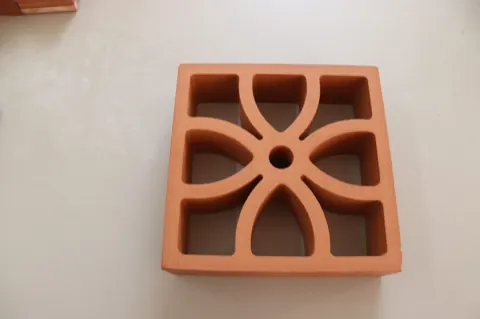
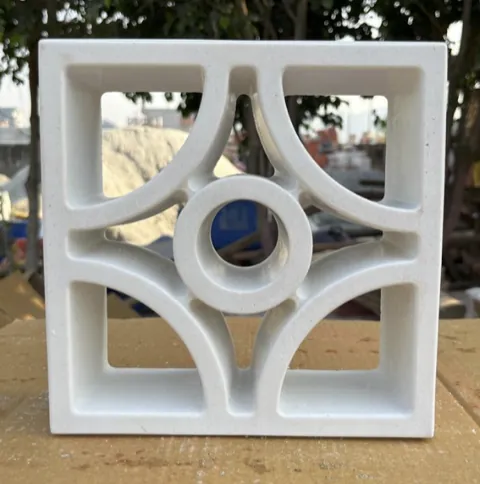
- Most light and air: Opal Jali and Petal Jali, or the white Design 8 ring.
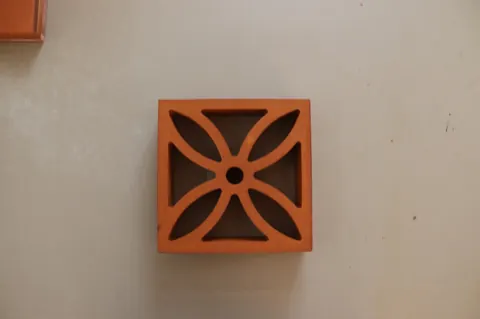
- Balanced: Flower Jali and Square Jali. Square throws neat rectangles of light, Flower throws petals.
- Most privacy and rain cover: Camp Jali. The hooded face blocks a straight view and sheds rain.
- Changing light through the day: breeze block Design 4. Its deep funnel lets light in at an angle, so the patch moves a lot as the sun moves.
Rain, monsoon and the clay jally
An open lattice lets in some rain when the wind drives it sideways. Three things help: a chajja or roof overhang above the jali, a sloped coping on top of a free-standing jali wall, and a floor inside that can take a little water near the wall. On walls facing the monsoon wind, the Camp Jali is the safer pick.
Clay jally in cold places
In the hills, think about where a draught is welcome. Stair towers, parking floors, utility rooms and verandah sides are good spots. Living rooms and bedrooms usually are not. Fired clay takes in a little water, and repeated freezing can damage a block that stays wet, so keep jali under an overhang at higher altitudes.
Laying and looking after it
A clay jally wall is laid like brickwork, in cement and sand mortar, usually in stack bond so the pattern stays continuous. It is a screen, so it goes inside a frame and carries no load. Read the full method in how to lay a terracotta jali wall, and count blocks with the jali brick calculator.
Cleaning is water and a soft brush. If you want extra protection outdoors, a clear breathable sealer for terracotta can go on after the mortar cures.
Questions
Clay jally: questions
Something not covered here? Call +91-90411-00702 and speak to the kiln team.
Is clay jally the same as terracotta jali?
Yes. Jali, jaali and jally are spellings of the same word for a perforated screen. Clay jally and terracotta jali both mean a screen block made of fired clay.
Does a jali wall keep a room cooler?
It shades the wall and window behind it from direct sun and lets air keep moving, which is why jali has been used in hot parts of India for centuries. How much cooler a room feels depends on orientation, wind and the rest of the building, so we do not quote a fixed figure.
Which side of the house should get a jali?
West and south walls get the harshest sun in north India, so a jali there does the most work. On the north side, a jali is mainly for privacy and air.
Do jali walls let in rain?
Open lattice designs let in some driving rain on exposed walls. Use a roof overhang or chajja above the jali, or pick the hooded Camp Jali for walls that face the monsoon wind.
Visit the kiln
See the jali blocks at our kiln in Ambala
Come to Kakkar Majra, hold the blocks and lay a few side by side to see the pattern. Or ask us to send photos and a sample of the clay jally blocks to your site.
+91-90411-00702- Village Kakkar Majra, Distt. Ambala, Haryana 134202
- Mon – Sat: 9 AM – 6 PM · Sun: Closed
Book a visit or ask for a sample
