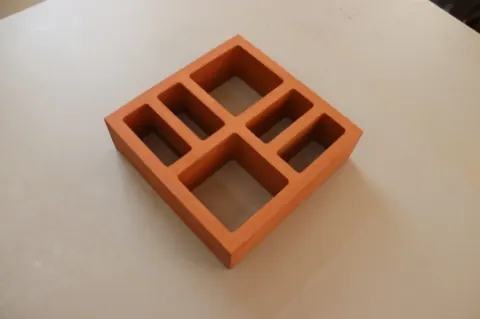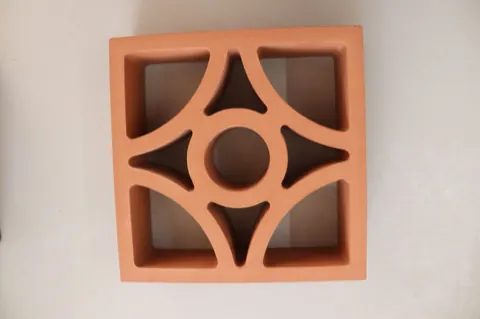
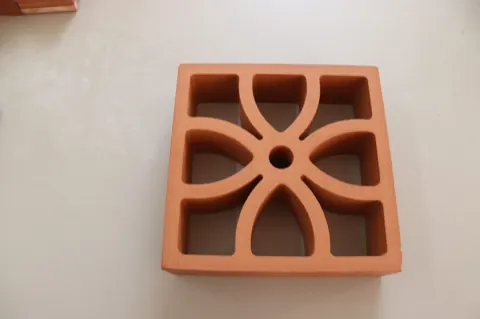
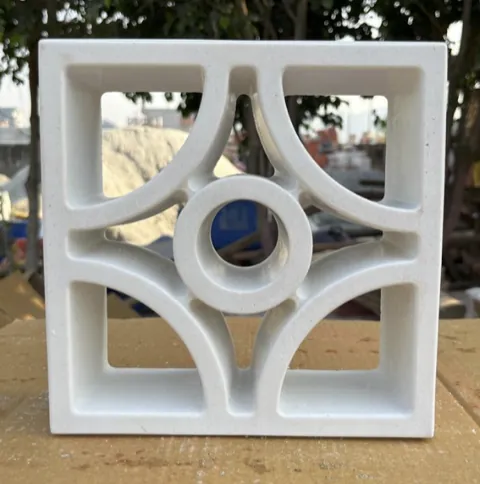
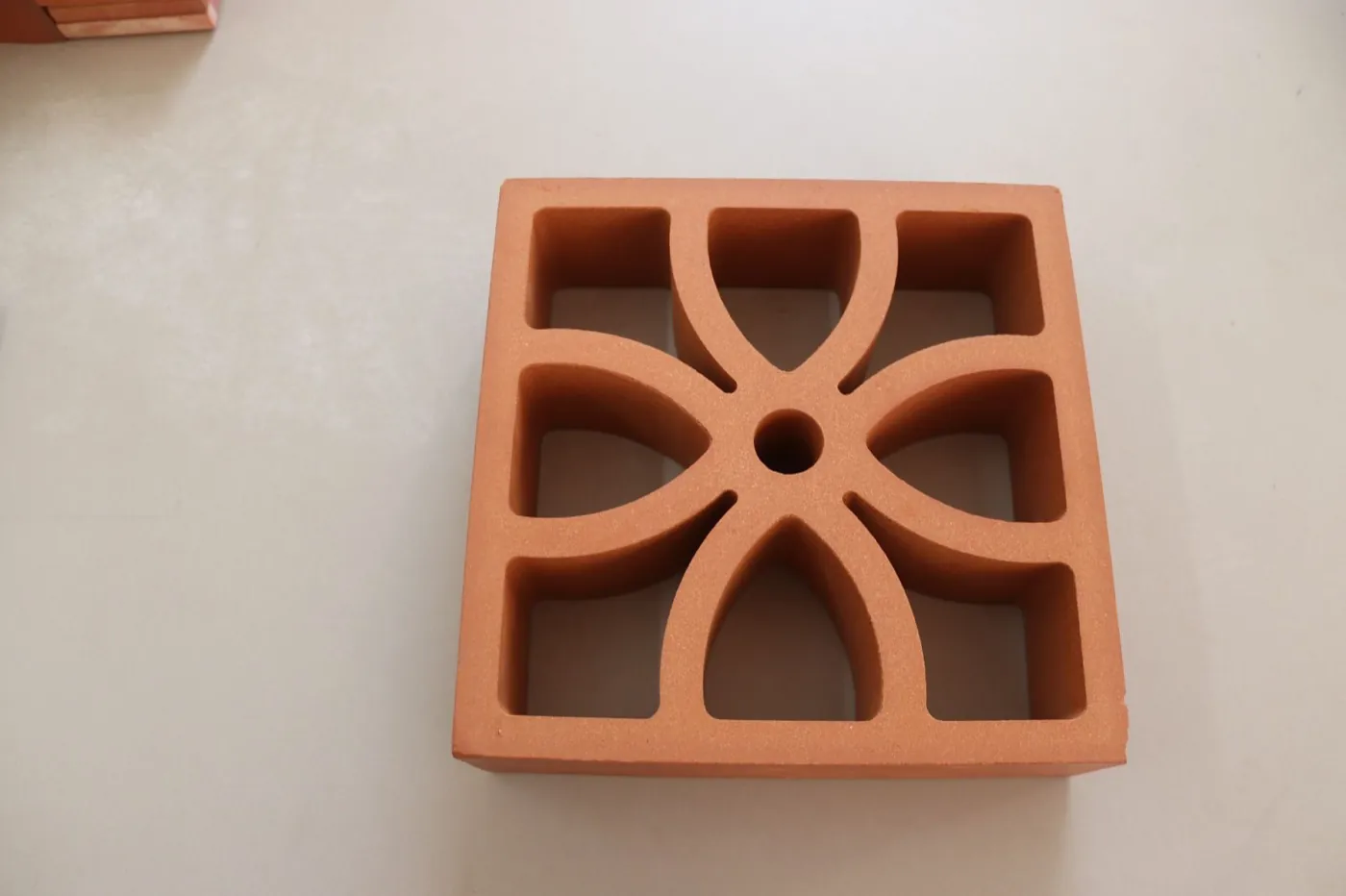
Any mason who lays brick can lay jali. The difference is that a jali wall shows every error. A joint that drifts by a few millimetres over ten rows is easy to miss in plastered brick, but in a lattice the pattern goes crooked and everyone can see it.
Before you start: the frame
At 2.5 inches thick, a terracotta jali wall is a screen, not a structural wall. It needs something solid around it: an RCC frame, a steel frame, or brick piers at the ends with a beam or lintel above. Nothing should rest on the jali.
For tall or long panels, ask your engineer whether to put tie bars or mesh in the horizontal joints every few rows and anchor them into the frame. Wind load matters more on a parapet or a high floor.
Laying the blocks
1. Soak the blocks
Dip each terracotta block in water and let the surface dry for a few minutes before laying. A bone-dry block pulls water out of the mortar too fast and the bond suffers.
2. Mix the mortar
Use a cement and sand mortar as you would for brickwork. Keep it a little stiffer than usual so it does not slump into the openings or run down the face.
3. Set out the first row
Lay the bottom row dry first, with spacers for the joint width, and mark the positions on the base. This is where you find out whether the opening fits whole blocks. Fix the first row on a level bed and check it with a spirit level and a string line.
4. Use stack bond
Most jali walls are laid in stack bond: each block sits directly above the one below, so the vertical joints run straight up the wall. This keeps the pattern continuous. Check that every block faces the same way; several of our designs look different when turned.
5. Keep the joints even
Pick a joint width, usually between 6 and 10 mm, and hold it for the whole wall. Plastic tile spacers or a wooden gauge stick help. Run the string line up for every row.
6. Clean as you go
Wipe mortar off the faces and out of the openings with a damp sponge before it sets. Dried mortar on terracotta is hard to remove without scratching the surface.
After the wall is up
Cure the joints with water for a few days, as you would any cement work. Finish the top with a sloped coping so rain runs off. On exposed exterior walls you can apply a clear, breathable sealer made for brick and terracotta once the mortar has cured fully.
To check how many blocks your wall needs, use the jali brick calculator. To choose a pattern, see the terracotta jali designs.